Bito chess
A chess trainer for the phone: build the openings you actually play, drill the moves you forget, and let it read your own games for what to fix next.
App
- Work
- Product design, UX and UI, Front-end development
- Made as
- Personal project
- Platform
- Progressive web app
- Tools
- TypeScript, Vite, chessground, chess.js

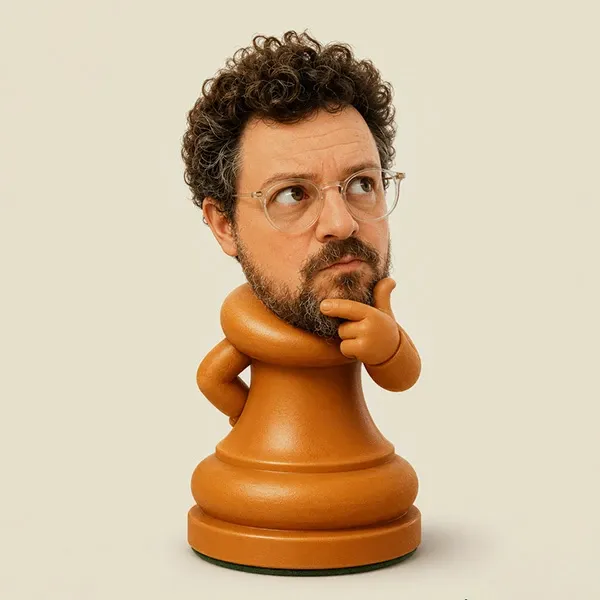
Why I built it
I am a passionate chess player and not a very good one. The opening trainers I tried were too rigid, too complicated, or built around somebody else’s repertoire, so I built the one I wanted to use. It worked: two hundred rating points in the first month.
What it does
You build the lines you actually play, confirm them once, and spaced repetition brings back the moves you forget. Then it reads your own games and says what to fix next: the openings that keep failing you, the mistakes you make again and again, and the good moves you had forgotten you played.
How it is built
Vite and TypeScript with no framework, and Stockfish compiled to WebAssembly so the analysis runs in your own browser. Your repertoire lives on your device, and an account is what carries it to the next one.
What it does
Build your own lines
Play the moves on the board, take a line from thousands of named openings, starter packs and famous traps, or build one around something the engine finds.
Train what you forget
Play a line once to confirm it, then drill it. Spaced repetition brings the moves you miss back sooner and keeps the ones you know out of the way.
Four ways to drill
Whole variations, the single moves you got wrong, time attack against the clock, and scouting the lines a real opponent actually plays.
Review your own games
Import from Chess.com and Lichess, or enter your tournament games. Bito finds the mistakes that keep coming back, and the brilliant moves you forgot you played, and turns both into positions to play again.
Beyond the openings
Rated puzzles matched to your level, classic endgames played out against the engine, and any position at all handed to Stockfish to argue with.
Measure what sticks
Training streaks, move memory, puzzle rating and your win rate by opening, so the next session starts with what actually needs work.
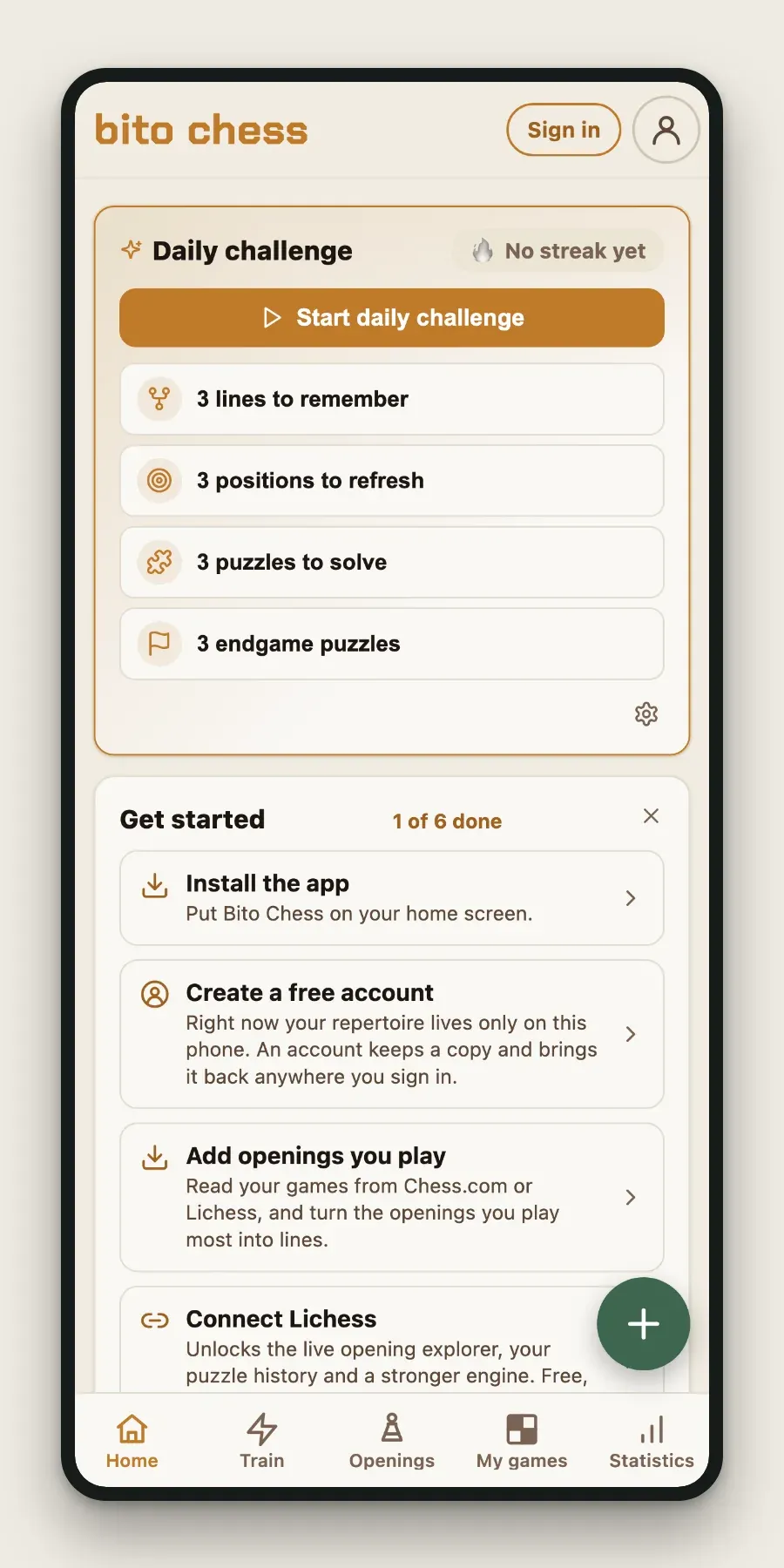
The daily challenge: a few lines, a few positions and a few puzzles, taken from whatever is due. 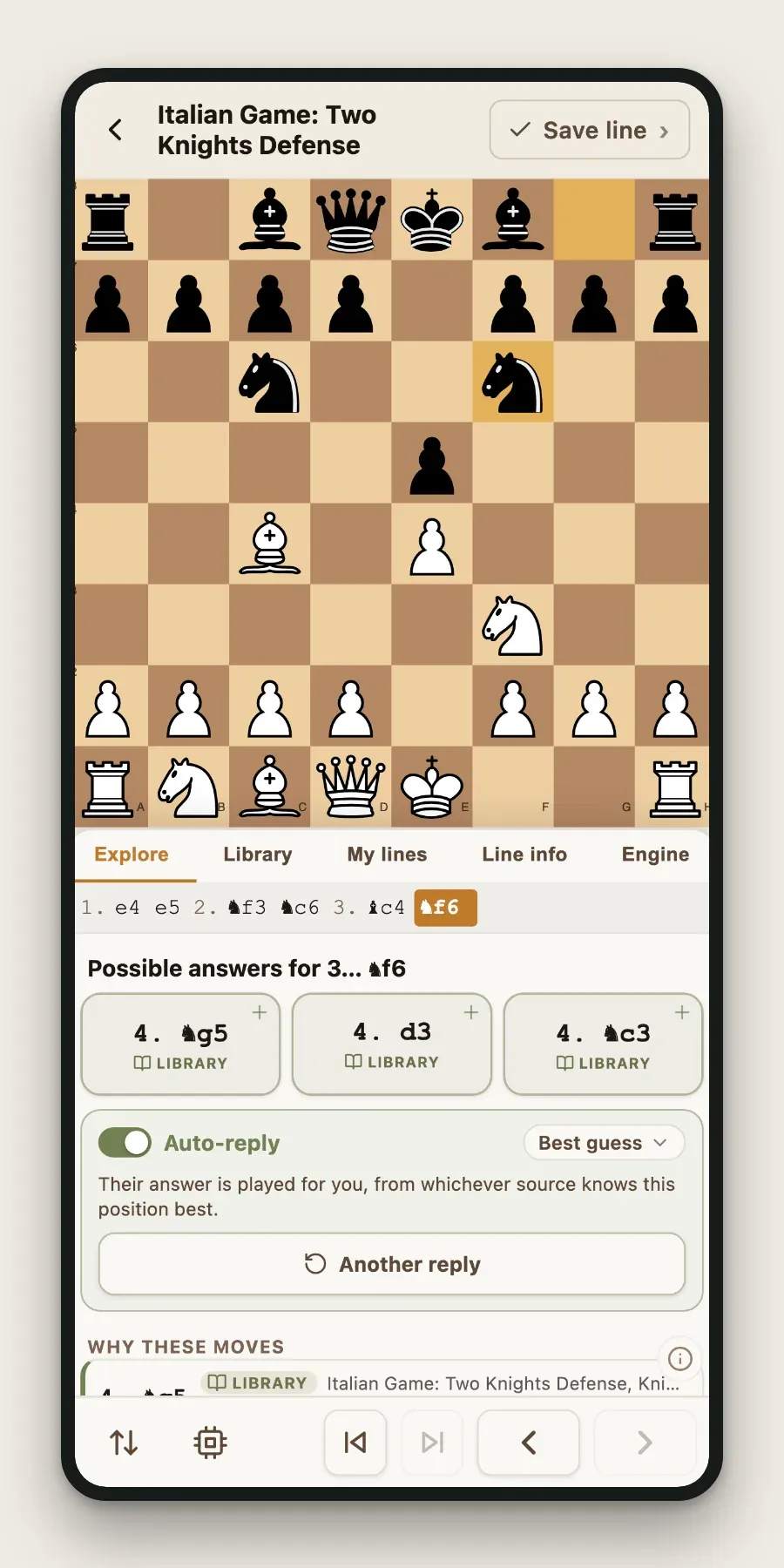
Entering a line by hand. Each possible answer carries the opening it leads to and what the database thinks of it. 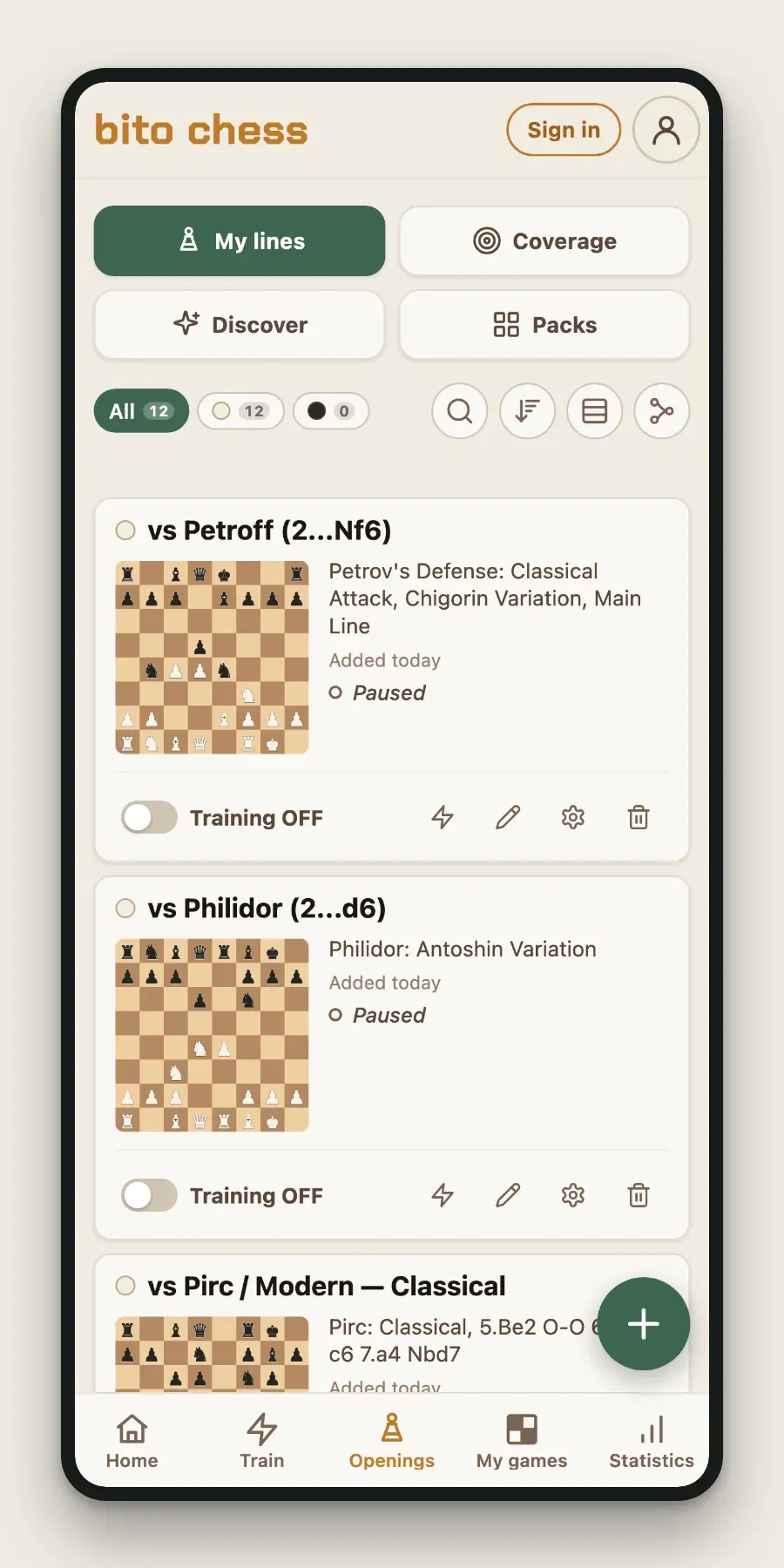
The repertoire. Every line can be trained, paused, tagged or annotated. 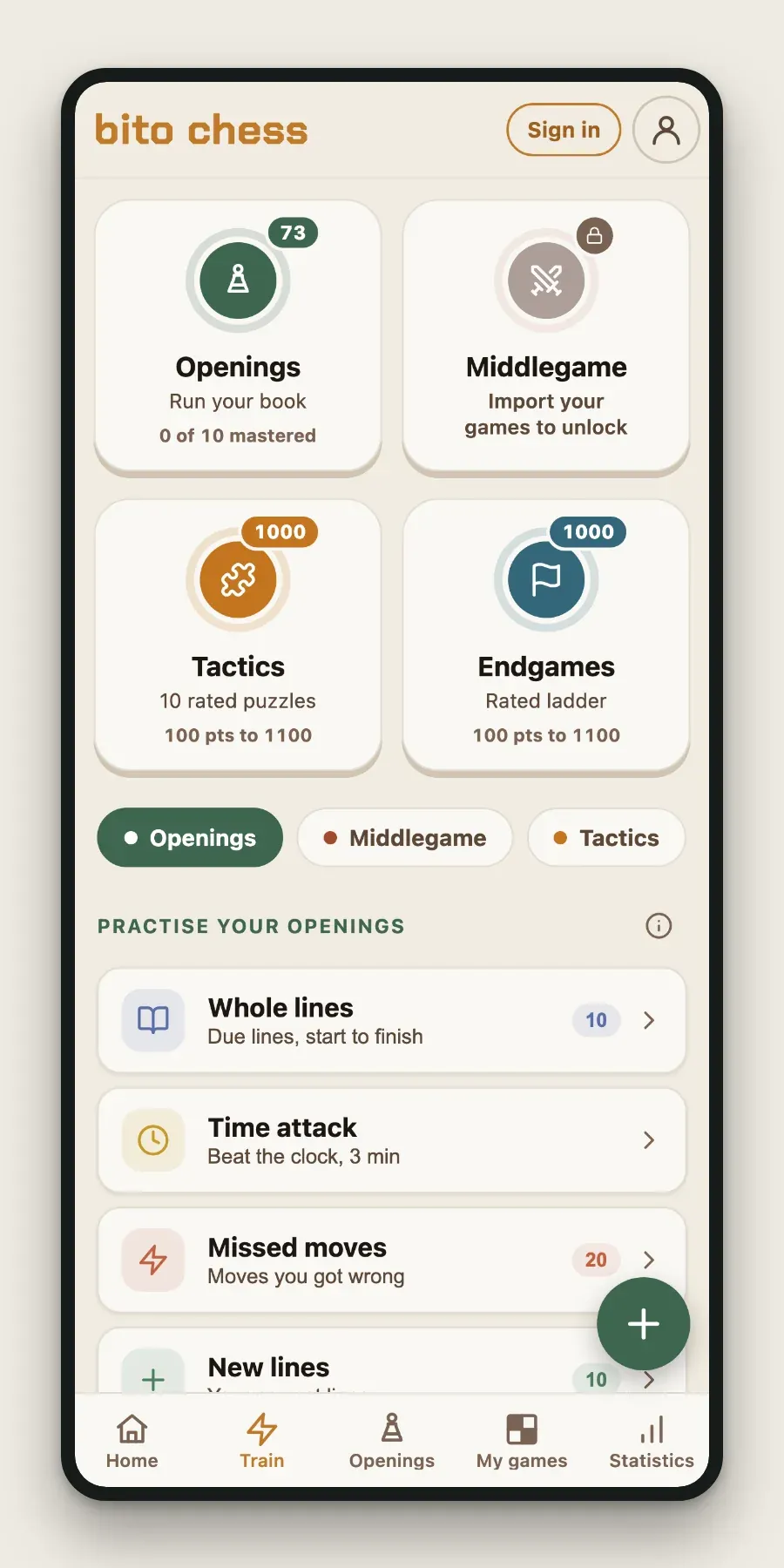
Training is divided by what you are practising, not by how long you have got. 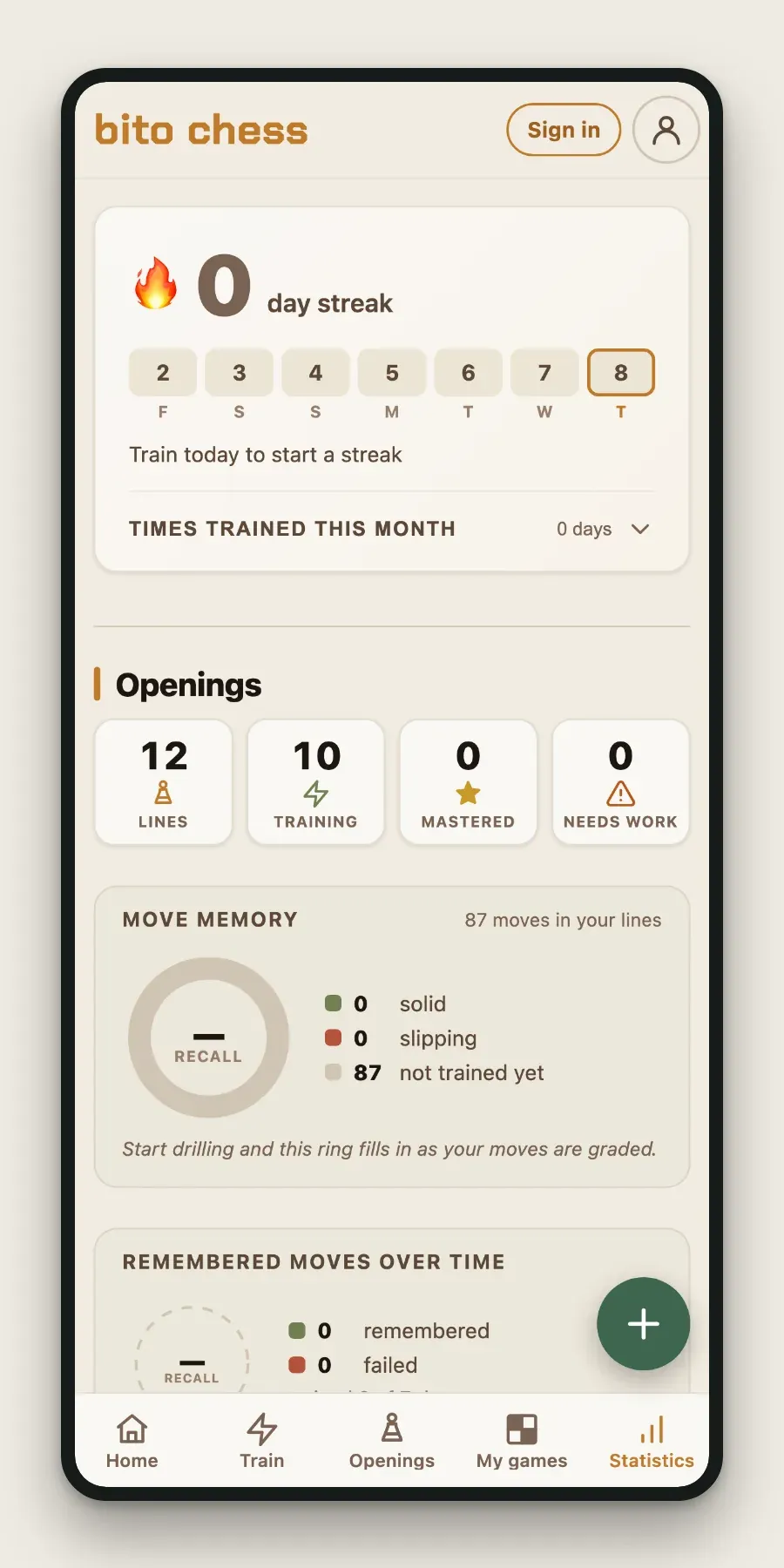
Move memory is the number that matters: how much of the repertoire is actually in your head.